- upload bom file
- +86 0755-82770375
- info@onepcba.com
- Compare Products
- Change Location:

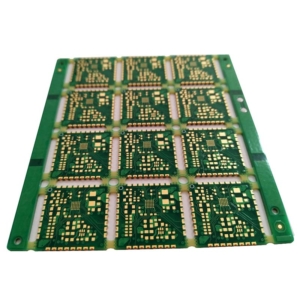
26-layer Industrial Control PCB
Layer: 26
Thickness: 3 mm
Material: ITEQ 180
Construction: 3+20+3 HDI PCB
Copper: Outer 6 OZ, Inner 6 OZ
Surface: ENIG
Application: Industrial control
Minimum blind hole: 0.1mm
Minimum line width: 3mil
Line spacing: 3.2mil
Product Details
Another common application for HDI printed circuit boards is industrial control systems. These systems consist of various components, such as sensors, actuators, and controllers, that work together to effectively control a machine or process. The advantage of using HDI PCBs over traditional PCBs is that they offer higher reliability, which reduces maintenance costs over time.
The difference between immersion gold and gold plating
1.Generally, the thickness of immersion gold is much thicker than that of gold plating. The immersion gold will be golden yellow and yellower than that of gold plating. Customers are more satisfied with immersion gold on the surface. The crystal structures formed by the two are different.
2.Since the crystal structure formed by immersion gold and gold plating is different, immersion gold is easier to weld than gold plating, and will not cause poor welding and cause customer complaints. At the same time, because immersion gold is softer than gold plating, gold finger boards are generally selected for gold plating, and hard gold is wear-resistant.
3.The immersion gold board only has nickel gold on the pad, and the signal transmission in the skin effect is on the copper layer and will not affect the signal.