
After considering power derating design when selecting resistors, is it still necessary to consider temperature derating design? Many people would answer incorrectly.
Typically, the rated power of a resistive component is determined under specific operating conditions, including ambient temperature and current flow. However, since resistive components are affected by various factors in actual operation, such as changes in ambient temperature and fluctuations in current flow, it is necessary to appropriately reduce the rated power to ensure that the resistive component can operate reliably under all operating conditions. Therefore, when selecting resistors, we need to consider that the rated power and actual temperature of the resistor do not exceed the maximum operating range allowed by the specifications. This derating is to ensure that the resistive component does not overheat and fail during long-term operation.
1. Power Derating
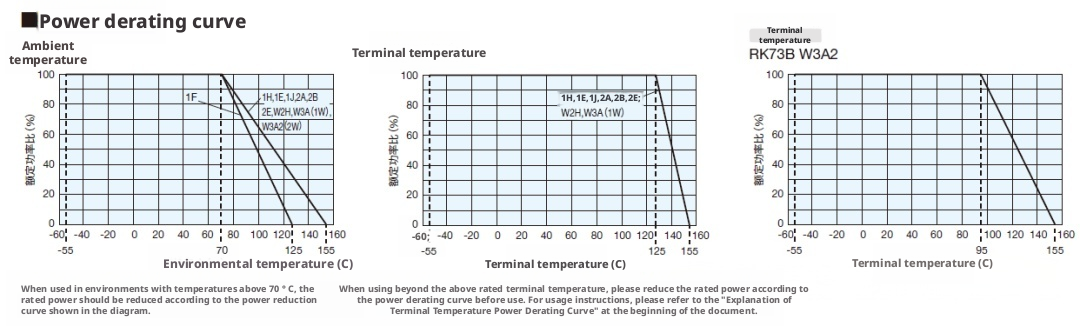
For surface-mount resistors, 70°C is generally the critical temperature point for power derating. This is especially important to consider when the operating temperature of the resistors in your product exceeds 70°C. It's important to note that different manufacturers use different reference temperature points for their derating curves. For example, KOA's surface-mount resistor specifications provide two derating curves: one based on ambient temperature and the other on terminal temperature. The choice depends on your specific application. If you are unsure whether to use the rated ambient temperature or the rated terminal temperature, prioritize the rated terminal temperature. The actual maximum power at which the resistor operates must be less than the power value corresponding to the derating curve.
2. Temperature Derating
Different resistors have specific operating temperature ranges. The actual operating temperature of a resistor must not exceed the maximum temperature limit specified in the datasheet. So, how is the resistor's operating temperature calculated?
Resistor temperature = Ambient temperature + Resistor temperature rise. The ambient temperature is the operating environment temperature of the product. Considering the extreme case, this would be the maximum operating ambient temperature. The resistor temperature rise can be obtained through calculation, i.e., temperature rise = thermal resistance * power. It can also be obtained through temperature rise testing.
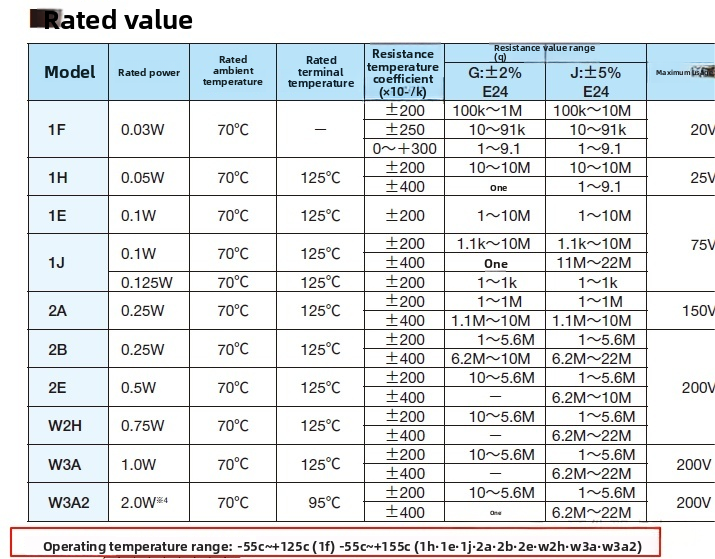
For example, when selecting a resistor, if a resistor has a rated operating power of 0.5W and a maximum operating ambient temperature of 120°C, and it operates at 0.25W, assuming a temperature rise of 20°C, should the power derating be considered based on the derating at 120°C or 140°C? Many people think it should be considered based on the derating at 140°C because the final temperature of the resistor is 140°C. If you think this way, you are wrong, because power derating itself already takes into account the temperature rise of the resistor. Therefore, considering the temperature rise again before performing power derating is equivalent to derating twice, which is over-designing.