
Many hardware engineers often only consider whether the resistor's tolerance is F or J when selecting resistors, which can sometimes lead to significant issues. Tolerance is one of the key parameters of a resistor. So, how should we consider the tolerance when selecting resistors? It depends on the specific role the resistor plays in the circuit. Resistors generally serve two primary functions:
The function of resistor
1. Current limitation: Resistors regulate the current in a circuit by limiting the flow of current. For example, a voltage regulator diode generally requires a series resistor and cannot be directly connected in parallel with a power supply.
2. Voltage divider: Resistors can be used as voltage dividers in circuits. For example, if we want to collect a certain voltage signal, we need to use resistor voltage division to convert the voltage signal into a voltage range that the MCU's ADC can accept.
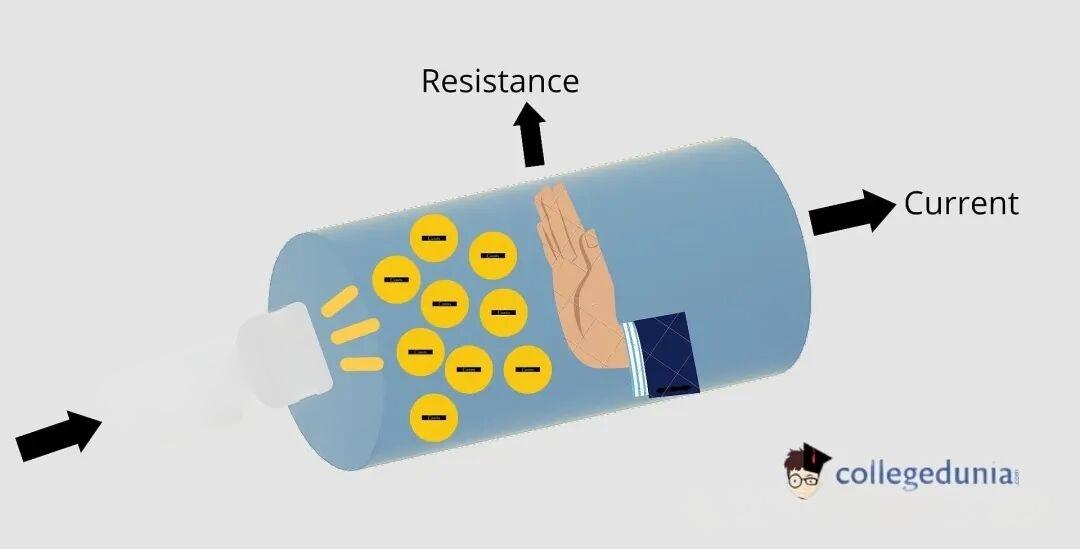
When the function of a resistor is to limit the current, the accuracy of the resistor is generally not that important. When calculating WCA, we only need to confirm that the resistor at the lower limit of the resistance value will not cause the current in the circuit to exceed the limit value, because high-precision resistors are generally more expensive. In this case, we can choose a conventional 5% precision resistor. When the function of a resistor is to divide voltage, assuming our goal is to accurately collect voltage signals, we generally need to use resistors with an accuracy of 1% or even 0.1%, because the error of the resistor will affect the value of the voltage signal divided by the resistor network.
What factors can affect the accuracy of resistance?
1. Manufacturing tolerance resistors involves laser cutting during production, which involves measuring the resistance value of each resistor body and using laser cutting to form the target resistance value. Generally, the initial value of batch production of surface mount resistors is smaller than the target resistance value. At this time, by adding cutting technology to the resistor body to narrow the current path, the resistance value will increase. After laser cutting, it will be within the resistance error range specified in the resistance specification book.
The accuracy of resistors is represented by corresponding codes, such as F representing ± 1% and J representing ± 5%. However, it should be noted that the accuracy error values corresponding to the accuracy codes only include manufacturing tolerances and do not include accuracy deviations caused by other factors.
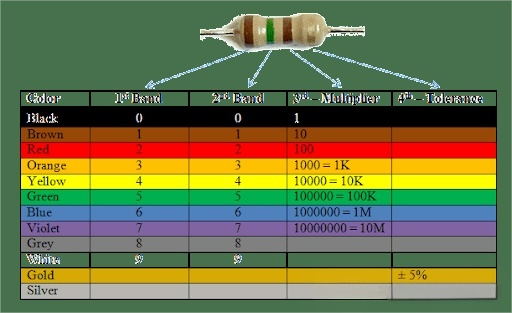
2. The temperature coefficient resistance value actually changes with temperature. The resistance specification book will include an indicator called the Temperature Coefficient of Resistance (TCR), which represents the relative change in resistance value when the temperature changes by 1 degree Celsius, measured in ppm/℃. Temperature coefficient of resistance=(R-Ra)/Ra ÷ (T-Ta) × 1000000; Among them, Ra represents the resistance value under the reference temperature condition, usually at room temperature of 25 ℃, Ta represents the reference temperature, usually at room temperature of 25 ℃, R generally represents the resistance value of the resistor under a certain temperature condition in the product, and T is the corresponding temperature. We usually use this formula to calculate the resistance deviation of a resistor at the upper or lower temperature limit of the product application environment.

For example, suppose the TCR of a chip resistor is 100ppm/℃, the reference temperature is 25 ℃, and the actual temperature upper limit of the resistor is 125 ℃. So, what is the resistance change rate of the resistor at 125 ℃?
(125-25)*100/1000000=1%。
Through the above calculations, we found that the resistance change rate of the resistor at 125 ℃ reached an astonishing 1%. If the manufacturing tolerance of the resistor is 1%, the impact of temperature on the accuracy of the resistor cannot be ignored. So when calculating the deviation of resistance value, it is necessary to consider the influence of temperature, especially when collecting voltage or current signals, otherwise the consequences will be very serious.