
The Intricate Web of Memory Price Surge
In October 2025, OpenAI signed an agreement with Samsung and SK Hynix under the project name "Stargate", securing a monthly supply of up to 900,000 DRAM wafers. This volume accounts for roughly 40% of the global DRAM output, which was snapped up entirely by a single buyer. The deal is part of OpenAI’s four-year, $500 billion infrastructure development initiative. Every observer of the memory market could easily foresee the subsequent market trends.
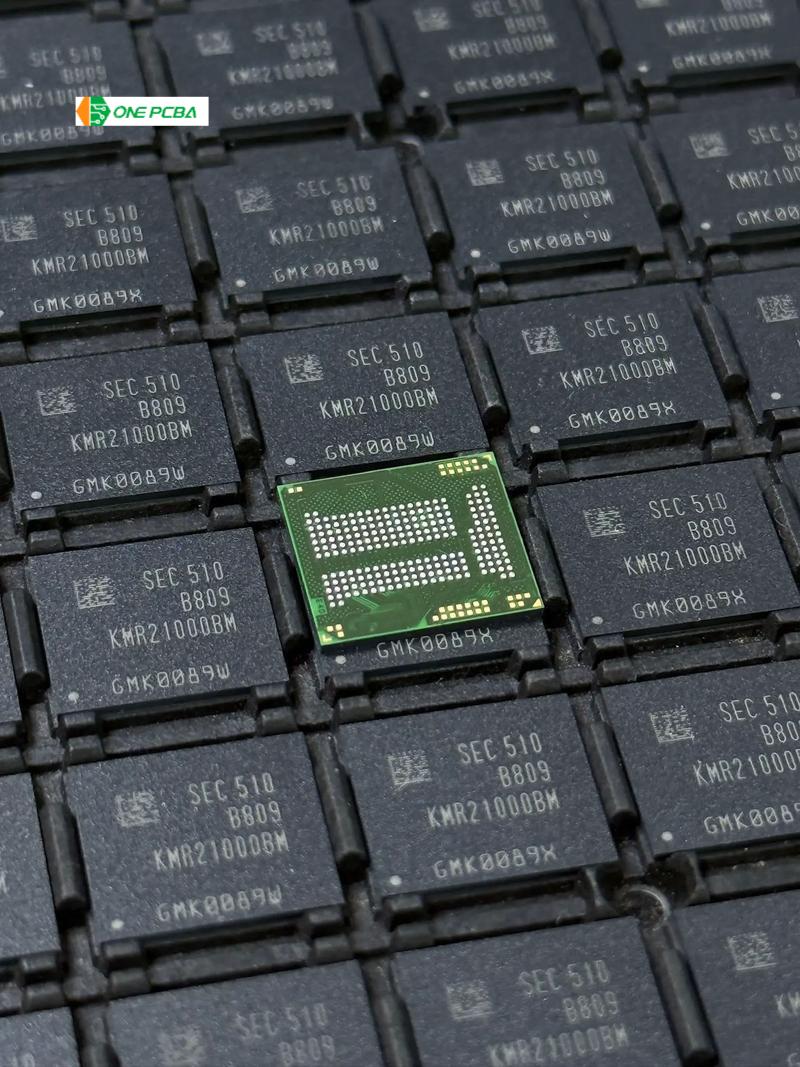
Following the announcement of the deal, the price of contracted DRAM soared by 171%, while the impact on the retail market was even more drastic. A set of Team Delta RGB 64GB DDR5-6400 memory modules was priced at $190 in August; now, the same product is listed online for $700. In less than three months, the price has surged by a staggering 268%. Such a steep price hike is almost unprecedented in the commodity markets during peacetime. Even the price of DDR4, which was supposed to be in oversupply, more than doubled.
Storage devices were also hit hard. Western Digital’s WD Blue SN5000 1TB SSD rose from $64 to $111, and the 2TB version climbed from $115 to $154. Demand is only part of the equation. OpenAI’s "Stargate" expansion requires enormous amounts of High-Bandwidth Memory (HBM). Data centers and consumer electronics manufacturers are competing for the same basic resources, with the former offering much higher prices—far higher.
Factories are redirecting their advanced DRAM production capacity toward AI-related needs, as the quotes offered by data centers are unmatchable by consumer device manufacturers. The situation might have been manageable if the supply had remained stable, but unfortunately, that was not the case. Samsung, SK Hynix, and Micron have all shifted their production lines to HBM, a specialized high-bandwidth memory designed for AI accelerator chips, where profit margins are significantly higher than those of consumer-grade DDR5. Micron’s entire HBM production capacity for 2026 has already been fully booked.
Despite continued purchases by PC manufacturers, the production volume of wafers for traditional memory modules keeps declining. What we are witnessing, therefore, is a surge in demand coupled with a restructuring of production. This indicates that the intricate collusive scheme behind the memory price surge has evolved into a predicament with no short-term solutions.
This memory market cycle differs from previous ones in that the upgrade path of AI infrastructure is drastically distinct from that of consumer hardware. Once these data centers are completed, they will continuously consume massive amounts of memory as AI models scale up, resulting in an ever-upward trending demand curve.
In the face of this market upheaval, tech giants have responded in vastly different ways, splitting themselves into two distinct camps. Sony stockpiled ample memory supplies for the PlayStation 5 before prices skyrocketed. According to industry insiders, its inventory is sufficient to maintain stable console prices for months to come and may even help the company weather the entire shortage period unscathed.
Apple also secured its supply in advance, and its profit margins are robust enough to absorb such cost increases that would cripple low-margin businesses. Lenovo went a step further: Bloomberg reported that its memory inventory is approximately 50% above the normal level, enough to sustain its operations until 2026.
In contrast, Microsoft finds itself in a passive position. Industry analysts predict that the Xbox console will most likely face another price hike, following an increase earlier this year. Valve’s timing could not have been worse. The core component costs of its highly anticipated living room gaming PC, the "Steam Machine", were two to three times higher than everyone’s budget by the time of its launch. The company refused to confirm the final retail price and directly attributed the issue to the memory shortage. Any value proposition it had planned was completely undermined by soaring memory costs. Framework, a modular laptop manufacturer, has removed all standalone memory modules from its online store.
The divide between these camps, shaped by their foresight, is exerting a profound impact on the competitive landscape—effects that will linger even if prices stabilize in the future. Sony and Lenovo have maintained their market positions, while Microsoft and Valve have fallen victim to the crisis. Effective supply chain management over just a few months has condensed market share shifts that would typically take years to unfold.
A natural question arises: as Samsung, SK Hynix, and Micron watch memory prices triple, why don’t they ramp up production to capitalize on the profits? Anyone who experienced the 2018 oversupply crisis would have a definitive answer.
From late 2016 to early 2017, tight memory supply pushed prices upward. The three major manufacturers responded by breaking ground on new wafer fabs in South Korea and China and expanding production capacity at existing facilities— a straightforward response on paper. Chasing high prices to boost capacity seemed logically sound in theory. However, the strategy collapsed in 2018. Demand plateaued just as all the new production capacity came online simultaneously, leaving warehouses overflowing with unsold chips.
Samsung’s semiconductor division, once a reliable profit engine, reported quarterly results that shocked investors. SK Hynix fared no better. The shadow of oversupply loomed until 2019 before gradually lifting. This bitter experience has profoundly shaped every production decision these companies make today.
Building a memory wafer fab and bringing it into operation takes years. Wafer allocation decisions made in November 2025 will determine market supply in 2027 and even 2028. Yet no one can predict whether AI infrastructure investment will remain as robust by then. What if the development of Artificial General Intelligence (AGI) hits a bottleneck? What if hyperscale users realize they have overinvested and start canceling orders?
Manufacturers would rather maintain the current shortage than repeat the disaster of oversupply. They call this "discipline", though consumers—who have watched $89 memory modules jump to $310—would likely use harsher terms.
Industry forecasts indicate that the tight supply of DRAM and NAND will persist until 2026, with only cautious optimism about a return to normalcy in 2027. Backlogs for large-capacity nearline hard disks already extend two years into the future, and distributors have begun bundling memory modules with motherboards to control inventory allocation.
Taking a broader view, an unsettling reality emerges: PC builders and gamers are essentially funding the development of AI infrastructure. Not directly or voluntarily, but this is precisely how the mechanism operates. Hyperscale users including OpenAI, Microsoft, Google, and Amazon have driven up memory prices to stock up for their training clusters. Manufacturers prioritize fulfilling these large orders, resulting in shrinking availability in the retail market. A teenager saving up for a gaming PC now has to pay an extra $400 for memory that cost only $130 three months ago.
There has never been a public policy debate weighing whether accelerating AI development is worth the cost of rising consumer computing expenses. The market simply allocates resources to the highest bidder—and when a single buyer can lock up 40% of global supply, this process becomes rapid and brutal.
Nearly all of the world’s DRAM is produced by just three companies. This high level of concentration has created systemic vulnerabilities that have not received adequate regulatory attention. Frankly speaking, the time has come to re-examine this situation.